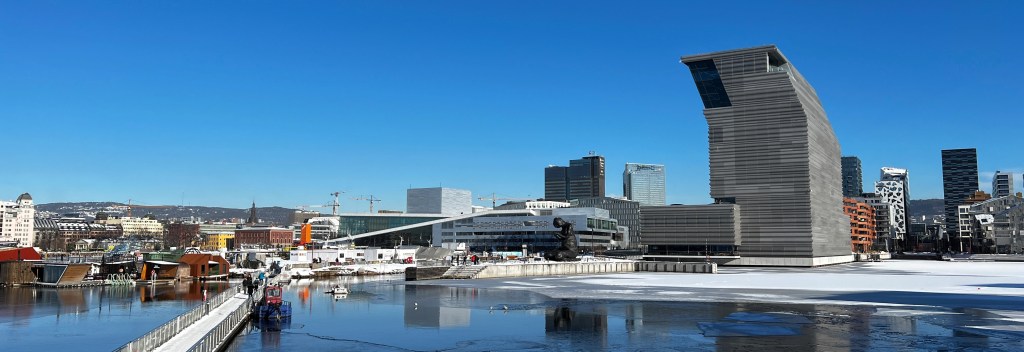
NERA/NFPF 2023 congress was hosted by OsloMet University.
Together with my colleagues from the University of Iceland, we presented first findings from the research project Language Policies and Practices of Diverse Immigrant Families in Iceland and their Implications for Education.
ABSTRACT:
Language policies and practices of diverse immigrant families in Iceland: Parents’ perspectives
Hanna Ragnarsdottir1, Kristin Jonsdottir1, Artëm Ingmar Benediktsson2
1University of Iceland, Iceland; 2Inland University of Applied Sciences, Norway
Migration to Iceland has grown rapidly in recent years and the changing demographics have had an impact on society as well as the education system. The qualitative research project, Language policies and practices of diverse immigrant families in Iceland and their implications for education (LPP) aims at critically exploring the language policies and practices of diverse immigrant families, how these impact their children’s education and the relationships between these families, their heritage language communities, their teachers and principals.
Theoretical framework includes writings on family language policy. Spolsky (2004) distinguished three components of family language policy: 1) language practices; 2) its language beliefs or ideology; and 3) efforts to modify or influence that practice by any kind of language intervention, planning or management. According to Schwartz & Vershik (2013), families face various challenges in their attempt to bring up a bilingual or a multilingual child. They note (p. 1) that there are, for example, “identity conflicts, time pressure restraints in negotiating conflicting language demands and the negative effects of macro-level social processes such as state language policy”. Even in these challenging circumstances, some families do succeed in holding on to their heritage language and using it with their children.
The LPP project involves 16 immigrant families, who have diverse languages and educational and socio-economic backgrounds, their children, as well as the children’s teachers and principals at preschool and compulsory school levels and, where relevant, their heritage language teachers. Data was collected in autumn 2022. Methods included semi-structured interviews with the parents and children (age 10-16) in order to gain deep understanding of their learning experiences and multiple language use. Furthermore, methods with the children included written narratives, language portraits (Dressler, 2014; Prasad, 2013) and other child friendly methods.
This paper presents findings from parents in the project and explores the language policies of the families, the bi- or multi-literacy of children and opportunities and challenges experienced by the families in negotiating their bi- and multilingualism. The main research questions are: How do multilingual families maintain and develop their children’s multiple language use and their ideas about languages?
The findings indicate that families have diverse language policies which they implement in different ways. Many factors restrain their efforts and thus, family language policies also change over time. Children from early on start to exert their agency in their language use and affect the development of the family language policy.
The main value of the project is providing insight into family language policies and their implications for educational policy and practices. Mapping the situation in Iceland in relation to active bi- and multilingualism and the development of bi- or multi-literacy of children will provide important information for schools in Iceland as well as in other Nordic countries on how to work with families for active bi- and multilingualism as well as providing information for parents and policy makers on effective language policies and practices.


